
Trees are a valuable part of any landscape, providing shade, beauty, and environmental benefits. However, even the healthiest trees can face challenges that affect their vitality. Recognizing the early signs of trouble is crucial to maintaining your trees and preventing safety hazards. Use this guide to identify common indicators of declining trees and learn when to take action.
1. Dead or Dying Branches
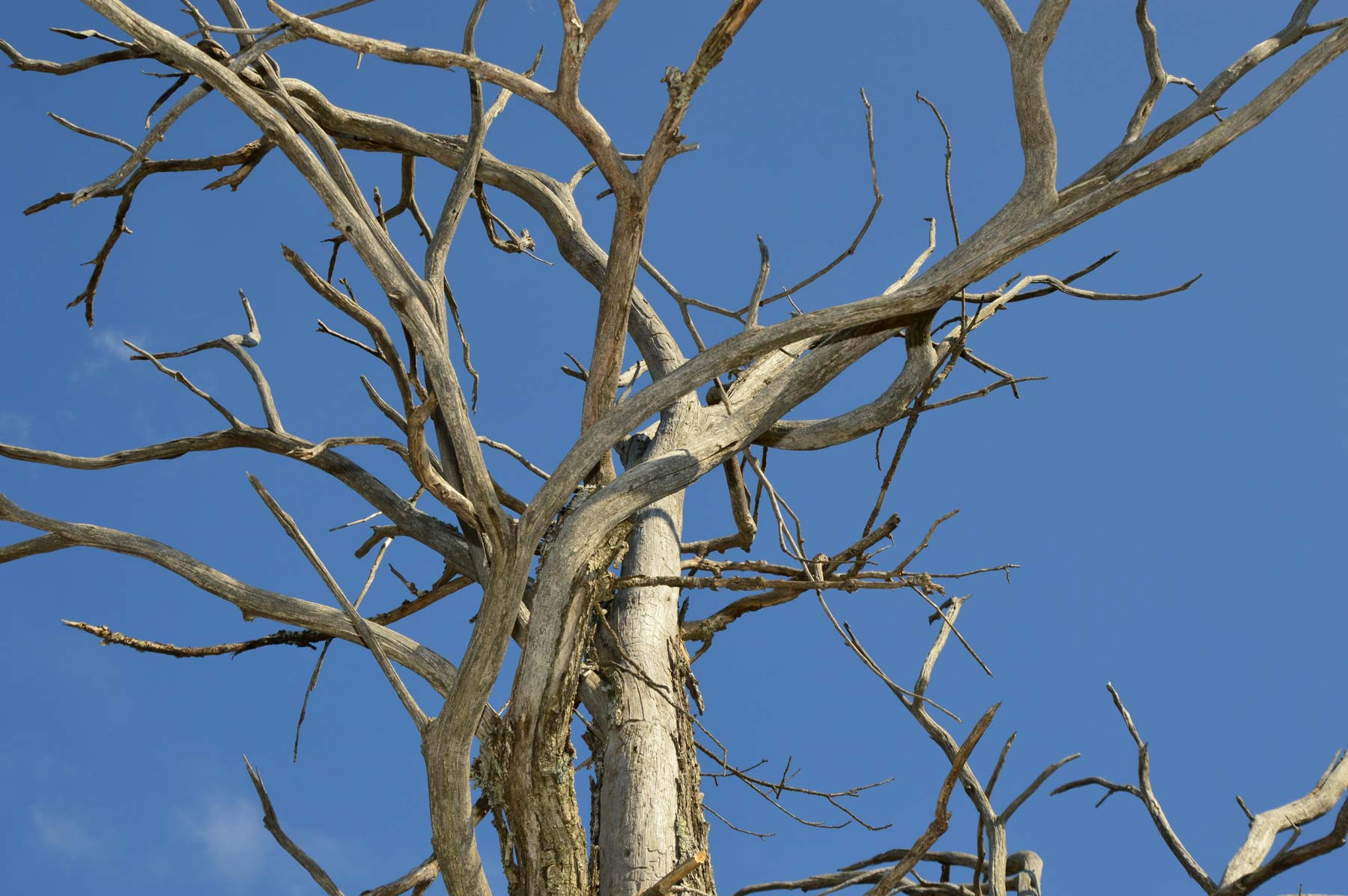
Dead branches are one of the most obvious signs of a declining tree. These branches can fall unexpectedly, posing risks to property and people.
What to Look For:
- Brittle branches that snap easily.
- Branches without leaves during the growing season.
- Darkened or decaying wood.
For more information on determining whether a tree is dead or alive, check out our blog: Visual Indicators That a Tree is Dead.
2. Cankers on the Trunk or Branches
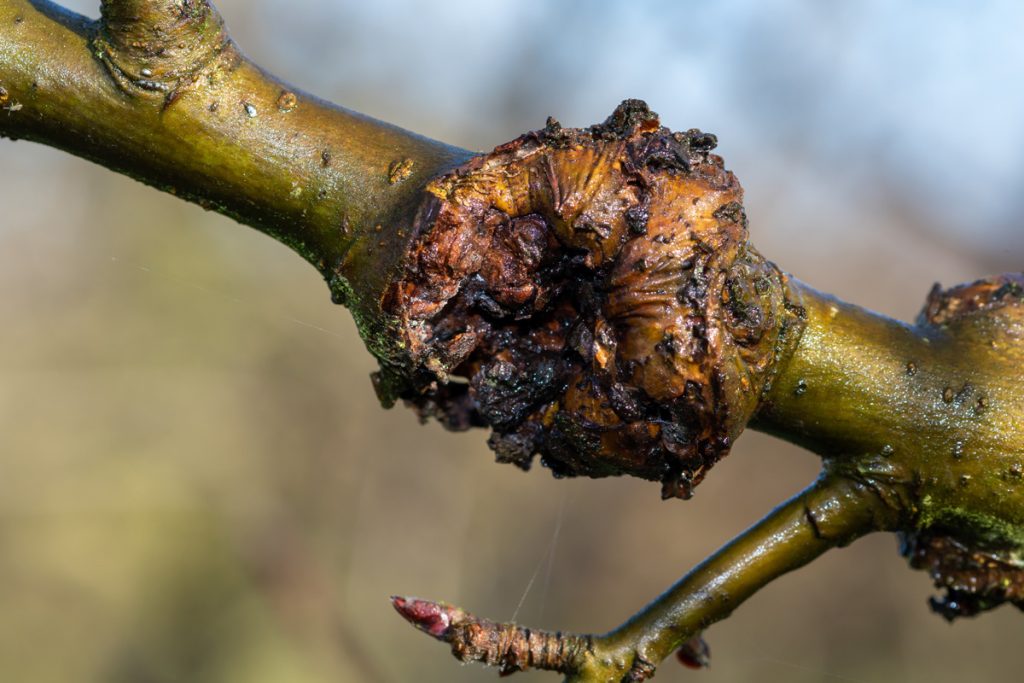
Cankers are dead, sunken, or discolored areas on the bark. They are often caused by infections or injuries and can weaken a tree’s structure over time.
What to Look For:
- Sunken patches of bark.
- Cracks or oozing areas around the canker.
- Fungal growth on or near the affected area.
Learn more about cankers and their impact on tree health in our blog: What Are Tree Cankers? Common Tree Ailment.

3. Fungal Growth
The presence of mushrooms or conks on the trunk or at the base of a tree often indicates internal decay.
What to Look For:
- Shelf-like fungi growing on the trunk or branches.
- Mushrooms around the tree’s base.
- Soft, crumbly wood near fungal growth.
4. Pest Damage
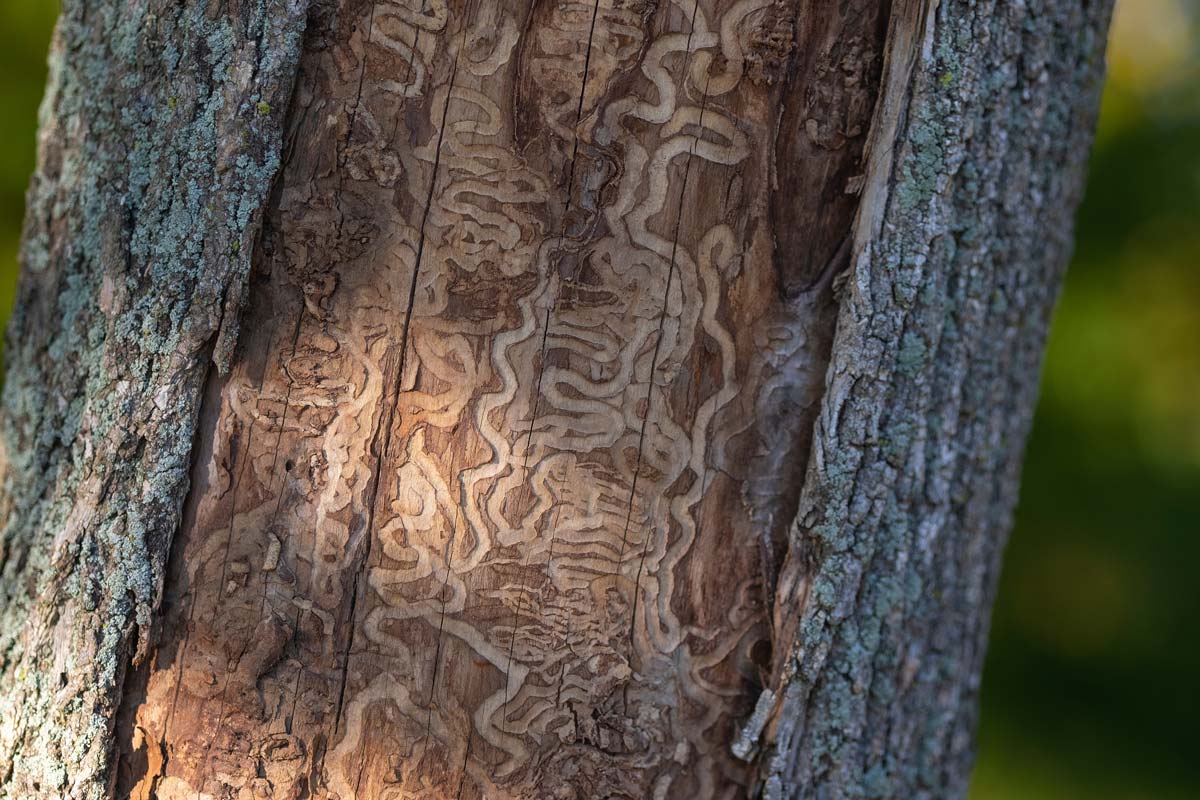
Pests can cause significant harm to trees, often introducing diseases that accelerate decline.
What to Look For:
- Boring holes in the trunk or branches.
- Frass (sawdust-like material) at the base or on the bark.
- Wilting or discolored foliage.
Explore how pests like the emerald ash borer and other insects affect trees in our blogs:

5. Unusual Leaf Behavior
Leaves can be an early indicator of a tree’s overall health. Abnormalities often point to underlying issues.
What to Look For:
- Yellowing or browning leaves out of season.
- Sparse or uneven foliage.
- Leaves with unusual spots or holes.
For a broader overview of symptoms that may indicate a sick tree, read our blog: Common Symptoms of a Sick Tree.
6. Cracks or Splits in the Trunk
Deep fissures in the trunk or major branches compromise a tree’s stability and increase the risk of failure.
What to Look For:
- Vertical or horizontal cracks.
- Splits with visible sap or discoloration.
- Widening gaps in bark.

Photo Credit
7. Root Issues
Tree roots are essential for stability and nutrient absorption. Problems below ground often manifest as visible symptoms above ground.
What to Look For:
- Soil heaving or exposed roots around the tree.
- Fungal growth near the root zone.
- Restricted root space or visible damage.
When to Call Green America Tree Care
If you notice any of these signs, it’s time to consult a professional arborist. Green America Tree Care offers expert evaluations and services to address declining trees, including pruning, pest management, and removals when necessary.
Helpful Resources
For more detailed information on specific tree health concerns, explore our related blogs:
- Visual Indicators That a Tree is Dead
- Common Symptoms of a Sick Tree
- Emerald Ash Borer in Georgia
- What Are Tree Cankers? Common Tree Ailment
- Common Insects and Issues They Cause
Protect Your Trees Today
Early detection is key to addressing tree health issues before they become costly problems. Contact Green America Tree Care today for expert advice, professional services, and a commitment to keeping your trees healthy and your property safe.