
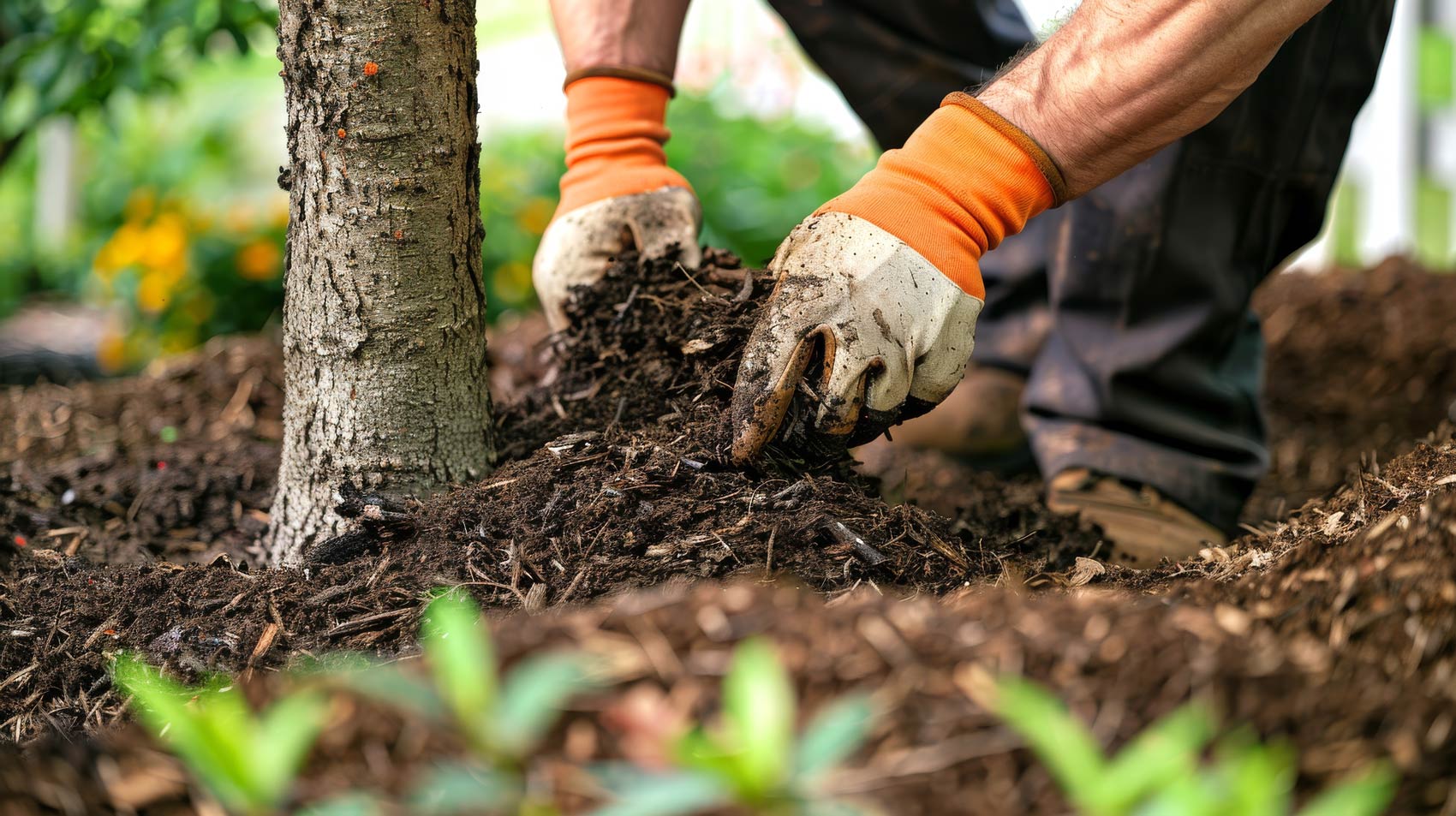
Mulch is one of the simplest and most effective tools in a homeowner’s landscaping toolkit, but when applied incorrectly, it can quietly do more harm than good. In Atlanta, where hot summers and dense clay soils are the norm, proper mulching is especially important for tree health.
Unfortunately, even the most well-intentioned homeowners make common mistakes that can stress trees, attract pests, and ultimately lead to decline. Explore with us what those mistakes are, how to avoid them, and why professional guidance can go a long way.
Mulch Matters More Than You Think
Mulch does a lot more than just tidy up a landscape bed. When done right, it:
- Helps soil retain moisture
- Reduces competition from weeds and grass
- Buffers soil temperature (especially in Georgia’s heat)
- Improves soil structure over time as organic mulch breaks down
But all of those benefits go right out the window when mulch is applied the wrong way.

Common Mulching Mistakes in Atlanta Yards
Even seasoned gardeners fall into some of these traps, so if you’ve done one or two, you’re not alone.
Here’s what to watch for:
Volcano Mulching
This one’s the big offender. Volcano mulching happens when mulch is piled high against the tree trunk, like a little mountain. It might look tidy, but it suffocates the root flare, holds moisture against the bark, and invites pests and decay. Over time, this weakens the tree’s natural defenses and leads to internal rot.
The fix? Always create a mulch donut, not a mulch volcano. Keep mulch at least 2–3 inches away from the trunk.
Too Much Mulch, Too Often
More is not always better. Applying mulch too thickly or too frequently can create a dense mat that prevents oxygen from reaching the roots. Experts recommend applying no more than 2–4 inches of mulch around trees, depending on the material. Any more than that, and you risk smothering your tree’s root zone.
The Wrong Type of Mulch
Not all mulch is created equal. Inexpensive mulch blends (especially those made from ground-up pallets or dyed wood) can contain contaminants or rob the soil of nitrogen as they decompose. Instead, opt for high-quality organic mulch such as pine bark, pine straw, or shredded hardwood.
Bonus for Atlanta homeowners: pine straw and pine bark are readily available and work well with ornamental trees and Southern landscapes.
Landscape Fabric or Plastic Under Mulch
This one might seem helpful at first because it’s meant to suppress weeds, but in reality, it can block water and oxygen from getting to your tree’s roots. Experts caution against placing synthetic weed barriers beneath mulch, especially for trees and shrubs. Over time, these materials compact the soil and cause more harm than good.
Best Practices for Healthy Mulching
So how do you mulch the right way? Here’s what we recommend:
- Depth: Keep mulch between 2–4 inches deep. Too shallow and you lose the benefits; too deep and you suffocate the roots.
- Distance from Trunk: Always leave a 2–3 inch gap between the mulch and the base of the trunk. Exposed root flare is a good thing!
- Shape: Spread mulch in a wide, even layer to cover the entire root zone (not just the base).
- Timing: Reapply mulch once or twice a year, ideally in spring or early fall—not every time the yard gets a refresh.
Organic mulch will naturally break down over time, feeding the soil and improving its structure. This is especially useful in Atlanta’s often-compacted, clay-heavy soil.
Why Proper Mulching Is Especially Important in Georgia
Georgia’s landscape poses some unique challenges for trees. Between high summer temperatures, periodic drought, and heavy rainfall, trees experience a lot of stress. Adding improper mulch practices to the mix only makes matters worse.
Clay-rich soils, which are common across metro Atlanta, tend to drain slowly and compact easily. That means oxygen levels in the root zone are already limited, and excessive or poorly placed mulch compounds the problem.
Choosing the right mulch and applying it properly is one of the easiest ways to give your trees a leg up in our region’s climate.
Download UGA’s full guide on mulching in the landscape (PDF)

Work With a Certified Arborist to Get It Right
Not sure if you’ve got the right mulch or whether your trees are suffering from past mistakes? That’s where we come in.
At Green America Tree Care, our certified arborists take a holistic view of tree health, including mulching practices, soil condition, and surrounding plant competition. Whether you’re planting new trees or maintaining old favorites, we’ll help you create an environment that supports long-term growth.
If you’re planning to mulch around newly planted trees or want help correcting volcano mulching from past landscapers, we’re here to help. You can learn more about our consultations and expert guidance right here.
Mulch Smart to Grow Strong
Mulching may seem like a minor task, but it has major implications for tree health. By avoiding common mistakes and following a few key best practices, you can protect your trees from preventable stress and damage—especially in Georgia’s heat and humidity.
Whether you’re updating your yard, maintaining a community greenspace, or just want to make sure your trees are thriving, don’t leave it to guesswork. Call in the pros at Green America Tree Care to make sure your trees are getting what they need and not getting smothered by good intentions.
Ready for healthier trees? Schedule a consultation with our team and let’s get your landscape back on track.