
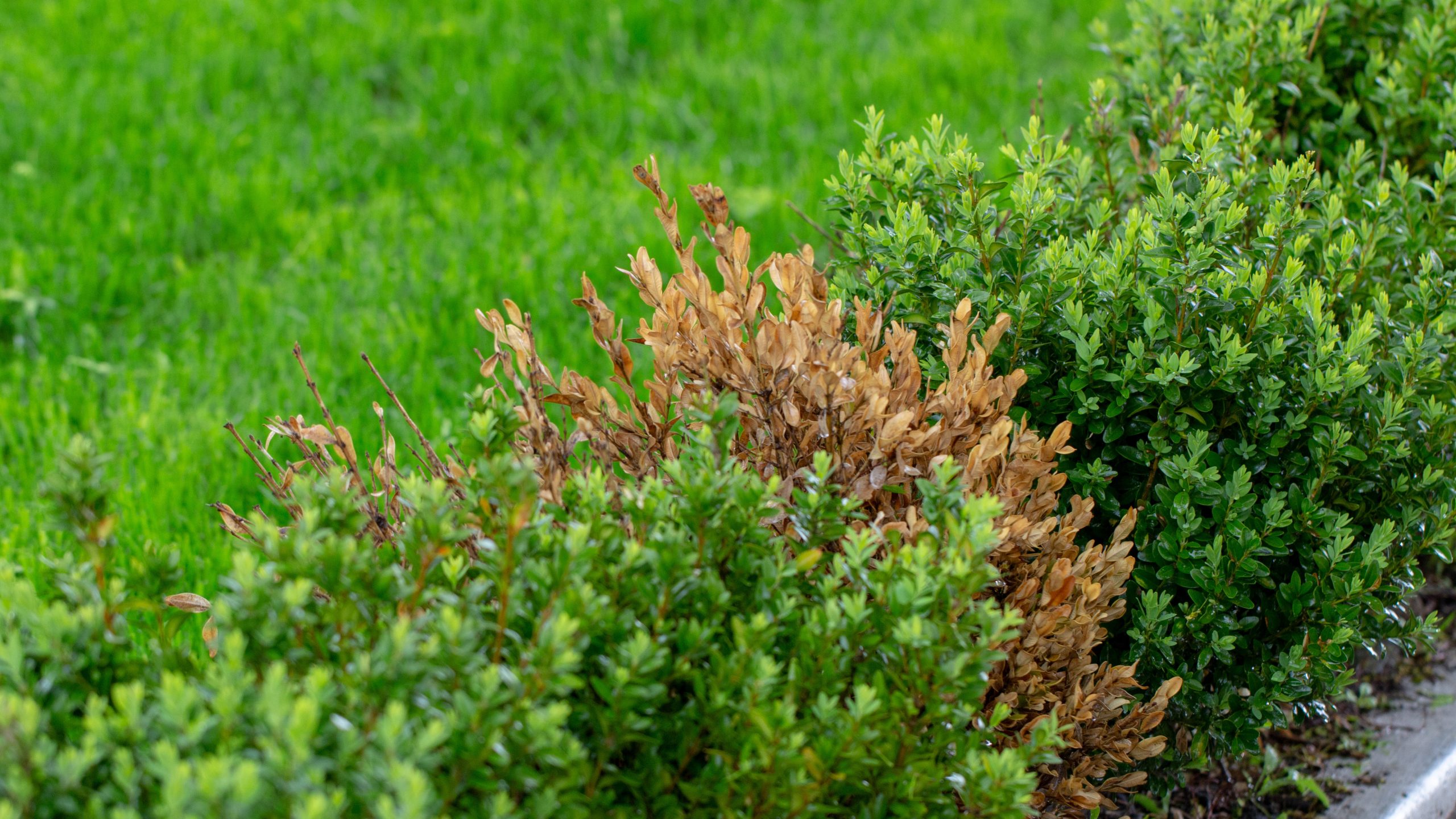
Hey there! Noticed something off with your boxwoods lately? If you’re in Atlanta and your boxwoods are looking a little under the weather, they might be dealing with boxwood blight. Don’t worry, though—I’m here to guide you through what boxwood blight is, how to spot it, and the best ways to treat and prevent it right here in Georgia.
What is Boxwood Blight?
Boxwood blight is a pretty serious fungal disease that hits boxwoods hard. It’s caused by the fungus Cylindrocladium buxicola, and it can quickly turn your lush, green shrubs into a sad, brown mess. This fungus thrives in humid, wet environments—pretty much like our typical Atlanta weather, right?
The Importance of Early Detection
- Catching boxwood blight early is crucial. The sooner you spot the signs, the better your chances of saving your plants and preventing the disease from spreading to other boxwoods in your area.
Symptoms of Boxwood Blight
Here’s what to look out for:
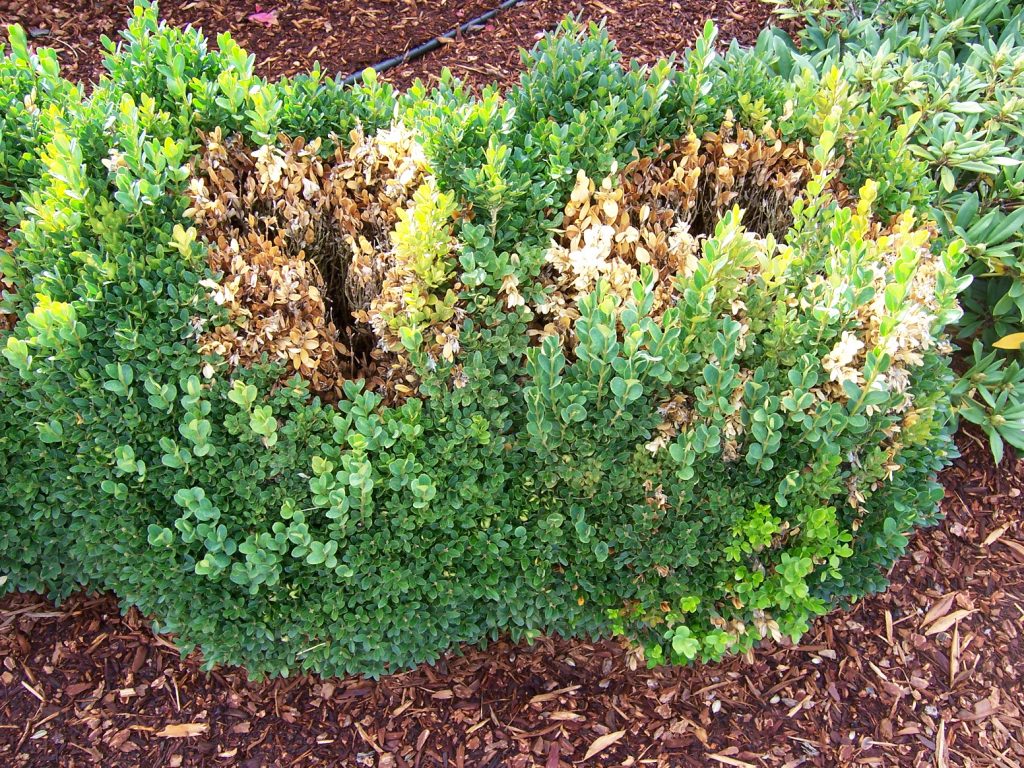
- Physical Signs: Watch for dark or light brown spots on the leaves, which can lead to defoliation (leaves falling off). You might also see black streaks on the stems.
- Environmental Conditions: Boxwood blight loves moisture. If your boxwoods are in a spot that doesn’t dry out well, or if Atlanta’s just had a lot of rain, be extra vigilant.
Diagnosing Boxwood Blight
- Tools and Techniques: If you’re unsure whether your boxwoods have blight, consider getting a professional diagnosis. A tree care specialist can take samples and provide a definitive answer using lab tests.
Treating Boxwood Blight in Atlanta
Once you’ve confirmed it’s blight, here’s what you can do:
- Immediate Actions: Remove any infected parts of the plant immediately. Be sure to clean your tools after, so you don’t spread the fungus to healthy plants.
- Sanitation Practices: Keeping the area around your boxwoods clean can help reduce the spread of the fungus. Remove fallen leaves and debris regularly.
Long-term Treatment Strategies
- Chemical Treatments: Fungicides can be effective in controlling boxwood blight, but they should be used as a part of a more comprehensive treatment plan. Always follow the label instructions or let a professional handle the application.
- Cultural Practices: Improving the conditions around your boxwoods can make a big difference. Make sure they have good air circulation and aren’t too crowded. Also, avoid overhead watering to keep the foliage dry.
Prevention of Boxwood Blight
- Preventative Measures: Once your current outbreak is under control, think about prevention. Choose resistant boxwood varieties if you’re planting new shrubs.
- Routine Care: Regularly inspect your boxwoods for signs of disease, and keep them healthy and well-maintained.
- Monitoring: Keep an eye on the weather. If you know there’s been a lot of rain or humidity, that’s a prime time for fungal diseases to spread.
Why Choose a Local Specialist?
- Benefits of Local Expertise: Local tree care specialists in Atlanta are familiar with the specific challenges and conditions of our area. They can provide personalized advice and treatment options that are most effective here.
- What to Look for in a Specialist: Look for someone with solid experience and good reviews, especially with boxwood care. Certifications in arboriculture or a related field are also a good sign of professionalism and expertise.
Dealing with boxwood blight might feel overwhelming, but with the right knowledge and a proactive approach, you can manage it effectively. Remember, the health of your landscape starts with you, but you don’t have to tackle it alone—local experts are here to help.