

A dead tree might seem harmless—just a quiet, leafless part of your yard, blending in with the landscape. But the truth is, dead trees can become a major hazard over time. Whether it’s a towering oak or a smaller ornamental tree, understanding the risks and knowing when removal is necessary can save you time, money, and safety headaches down the road.
So—do dead trees always need to be removed? Let’s discuss.
The Short Answer: Usually, Yes
In most cases, a dead tree should be removed. That’s because dead trees are no longer structurally sound. Over time, their limbs become brittle, the trunk weakens, and internal decay spreads—turning them into unpredictable hazards.
Even if a dead tree looks stable on the outside, it may be rotting from within. One good gust of wind or a heavy rainstorm could send limbs—or the entire tree—crashing down.
And here’s the kicker: if that tree is near your home, your car, a sidewalk, or a neighbor’s property, you’re not just dealing with a natural risk—you’re dealing with a potential liability.
When a Dead Tree Must Be Removed
While it’s true that some dead trees can be left alone under the right conditions (keep reading for more), the following situations all call for professional removal.
It’s Close to a Structure or Path
If the tree is anywhere near your home, driveway, garage, fence, or frequently used walkways, it’s got to go. One falling branch could do serious damage—or worse, injure someone. And if the tree falls on a neighbor’s property, your insurance company may come knocking with questions.

Signs of Decay or Instability (Even If It Looks Fine From Afar)
Dead trees may stand tall for a while, but it’s often false confidence. Look for these warning signs that things are getting dangerous:
- Large cracks or splits in the trunk
- Mushrooms or fungal growth around the base
- Hollow sounds when you knock on the trunk
- Bark falling off in sheets
These signs indicate that the tree’s internal structure has already begun breaking down.
It’s Home to Pests or Fungus
Dead trees are magnets for insects and wood-boring pests like termites, carpenter ants, and beetles. If these bugs move from the dead tree into your healthy trees—or worse, your house—you’ve got a bigger problem on your hands. Fungal infections can also spread, damaging nearby plants and trees.
You’re Planning Landscaping, Construction, or a Property Sale
If you’re getting ready to renovate, sell your home, or plant something new in the area, removing a dead tree is often a necessary first step. Leaving it in place can complicate projects and deter potential buyers—no one wants to inherit a hazard.
Are There Situations Where a Dead Tree Can Stay?
Yes—but with conditions.
Some dead trees (also known as “snags”) serve as valuable wildlife habitat. Birds, squirrels, raccoons, and even owls use them for nesting, roosting, and shelter. If the tree is far from any buildings or human activity—say, in the corner of a wooded lot—it may be fine to leave it in place, at least for a time.
However, it’s essential to have a certified arborist evaluate the tree first. Even in a remote area, a decaying tree can fall unpredictably or become a breeding ground for disease and pests that affect your living trees.
According to the National Wildlife Federation, snags can provide essential habitat—however, they still require thoughtful management to prevent hazards.
DIY vs. Professional Dead Tree Removal
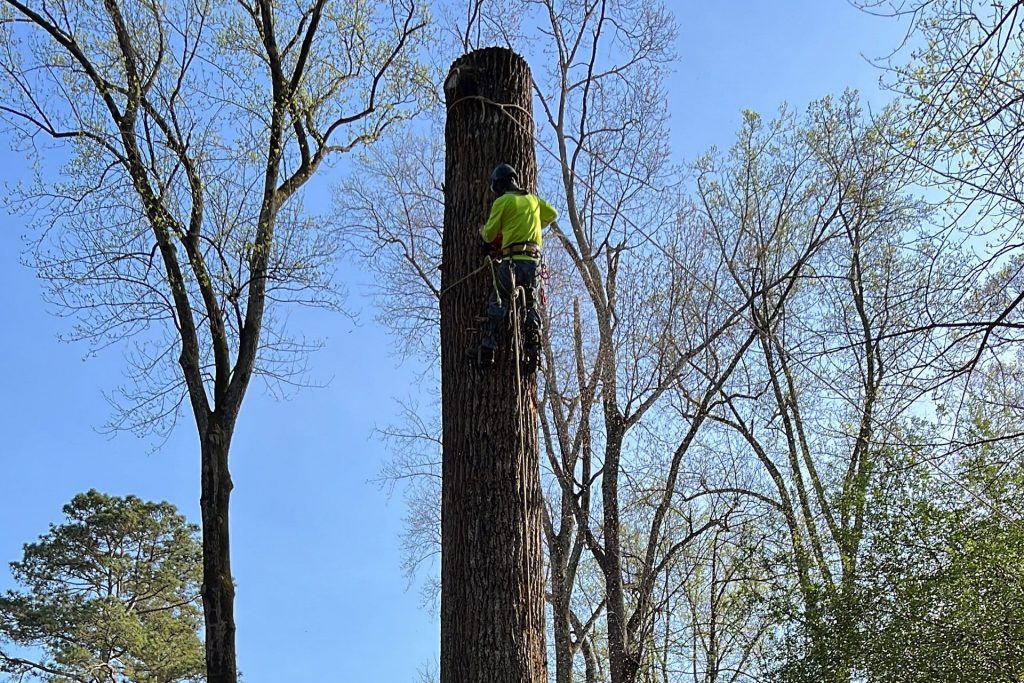
Let’s be real: removing a tree is never as simple as grabbing a chainsaw and going to town. That’s especially true for dead trees, which are more brittle and unstable than their living counterparts.
Here’s why hiring a professional is the smart move:
- Unpredictable Breakage: Dead limbs can snap under pressure or weight unexpectedly during removal.
- Rotten Wood Won’t Support Climbers or Ladders: You can’t safely scale or cut from a dead tree like you could a healthy one.
- Special Equipment May Be Needed: If the tree is large or close to a structure, you might need a crane or rigging system.
The pros at Green America Tree Care bring the right gear, training, and experience to handle dangerous removals without risking damage to your property or injury to anyone nearby. You can learn more about their Tree Removal Services here.
What About Trees That Might Be Dead?
Sometimes it’s hard to tell if a tree is truly dead or just dormant or stressed. If you’re unsure, try the scratch test: gently scrape away a small section of bark with your fingernail or a knife. If the wood underneath is green, the tree is still alive.
Other signs of life include:
- Small buds (even if they haven’t opened)
- Flexibility in the twigs (rather than dry and snapping easily)
If you’re not sure what you’re seeing, schedule an Arborist Consultation with Green America. Their certified arborists can diagnose the tree’s condition and help you make an informed decision.
When in Doubt, Call the Pros at Green America Tree Care
Leaving a dead tree standing can be tempting, especially if it doesn’t seem to be causing any harm. But hidden risks can grow over time—and by the time something falls, it’s too late.
Whether you’re concerned about safety, pests, property damage, or just want peace of mind, the best move is to let the experts take a look.
Green America Tree Care is proud to serve the greater Atlanta area with certified, professional tree services that put your safety and your property first. From consultations to safe removals, they’re your go-to team for tree health, risk assessment, and landscape protection. Ready to remove a dead tree—or unsure if you need to? Schedule a consultation today.